How to Import WPC Products from China for Wholesale Distribution
Importing WPC products from China is not simply a matter of finding the lowest quotation. For an importer or distributor, the more important questions are whether the product fits the local market, whether the factory can maintain consistent specifications, and whether the order can be packed and loaded efficiently. These factors affect your landed cost, inventory risk, customer complaints, and ability to reorder the same product.
This guide explains how to import WPC products from China for wholesale distribution. It covers product selection, manufacturer evaluation, sample approval, quotation comparison, MOQ, quality control, packaging, container loading, and the order process. The goal is to help you build a repeatable sourcing system rather than treat each shipment as a separate purchase.
1. Define the Product for Your Distribution Market
Start with the customers and applications you plan to serve. A distributor supplying exterior facade materials has different requirements from one supplying commercial decking or interior wall panels. If the product scope is unclear, quotations from different suppliers will not be directly comparable.
Before contacting a WPC supplier in China, prepare basic market information:
Product category: decking, exterior wall cladding, indoor wall panel, ceiling panel, louver, or timber tube
Indoor or outdoor use
Common applications in your sales channel
Preferred profile dimensions and board lengths
Required colors and surface textures
Installation accessories your customers will need
Local climate and exposure conditions
Technical documents required in the destination market
Estimated quantity for each model and color
This information allows a manufacturer to recommend a suitable product range and prepare a more accurate quotation. It also helps you avoid importing too many profiles or colors before you understand local demand.
2. Select the Correct WPC Product System
Indoor and outdoor WPC products should not be treated as one category. The material structure, surface requirements, testing, and installation considerations are different. Confirm the intended use before comparing appearance or price.
Outdoor WPC products
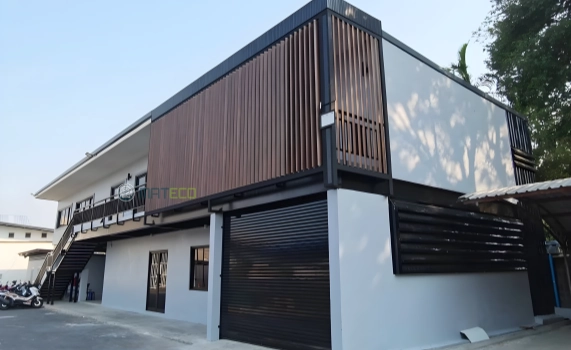
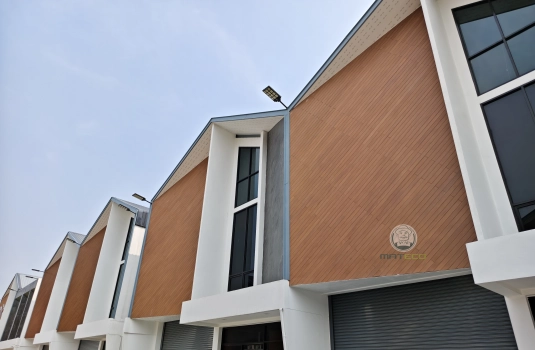
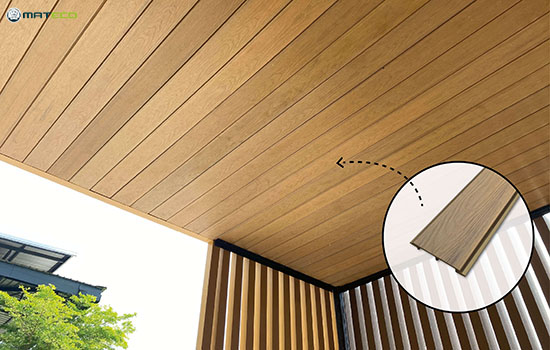
MATECO's outdoor range includes WPC exterior wall cladding, decking, timber tubes, and sun-shading louvers. These products use a PVC-based WPC core with an ASA co-extruded surface layer. The ASA layer is directly co-extruded with the core without adhesive. It is used to improve outdoor surface protection, UV resistance, and color stability.
For outdoor products, ask the supplier about the profile structure, surface layer, color options, relevant test data, expansion characteristics, and installation system. For decking, the complete system may include joists, clips, screws, and edge accessories. For certain louver applications, reinforcement may also need to be considered.
Indoor WPC products
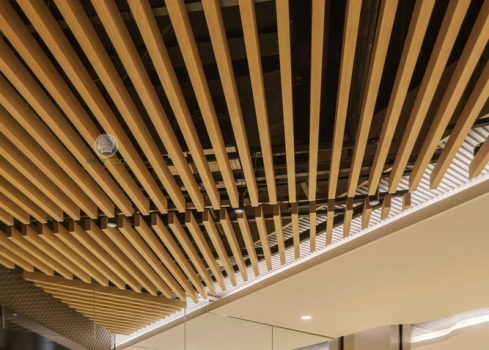
MATECO's indoor range includes wall panels, timber tubes, and ceiling click panels. These PVC-based WPC products are manufactured without a surface film. When selecting indoor products, focus on the profile, extrusion color, wood-grain appearance, installation method, and relevant indoor testing documentation.
Do not apply indoor product claims or reports to outdoor products, and do not assume that a visually similar panel is suitable for both environments.
3. How to Evaluate a WPC Manufacturer in China
A reliable sourcing decision should be based on manufacturing fit, product evidence, and wholesale support. A large catalog alone does not show whether the supplier can produce the profiles you need consistently.
Confirm the manufacturer's product focus
Ask what type of WPC the factory manufactures, which extrusion technologies it uses, and which products form its main range. MATECO is a PVC-based WPC manufacturer established in 2009. Its factory-direct wholesale range covers outdoor ASA co-extrusion products and indoor WPC products.
Review product-specific technical documents
Ask for reports that apply to the product category you are considering. Check the sample description, test method, result, and scope instead of accepting a general list of certificate names.
These results help a buyer review product performance, but they do not replace destination-market compliance checks. Confirm local requirements with your importer, testing body, or other qualified professional before placing an order.
Assess distributor support
A wholesale relationship requires more than production. Ask whether the supplier can provide product specifications, samples, installation training, product training, photos, videos, catalogs, development support, and information about new products. These resources help your local sales and technical teams introduce the range more effectively.
Verify the factory when appropriate
For a new supplier or recurring container business, consider a factory visit, live video review, or independent audit. Review the extrusion area, raw-material handling, product inspection, warehouse, packaging, and loading process. The objective is to understand who controls production and how the factory handles consistency and corrective action.
4. Approve Samples Before a Wholesale Order
Samples allow you to compare the actual profile, color, surface, weight, and installation fit. They can also be shown to distributors, contractors, or key customers before you commit to stock.
For each sample, confirm:
Product code and intended application
Profile dimensions and board length
Indoor or outdoor material structure
Color and surface texture
Fit with clips, joists, trims, and other accessories
Required technical documentation
MATECO provides free samples, while the buyer is responsible for shipping costs. After evaluation, identify the approved sample clearly and keep it as a reference for the bulk order. If your market requires independent testing, confirm the correct standard first and submit the agreed sample to a qualified laboratory.
5. Compare Quotations, MOQ, and Product Mix Correctly
A useful WPC quotation should be linked to a clear specification. Ask each supplier to quote the same product code or drawing, dimensions, color, length, quantity, accessories, packaging, and delivery term. Otherwise, a lower price may simply represent a different product or a quotation with fewer included items.
Your request for quotation should include:
Product type, profile code, or drawing
Quantity by model and color
Required lengths
Surface and color reference
Accessories and spare parts
Packaging and labeling requirements
Destination port
Requested trade term
Required technical documents
MATECO's mixed-order MOQ is USD 12,000, with 2,000 meters per model per color. This policy is designed for wholesale supply rather than retail or small residential orders. Importers should therefore plan the initial product mix carefully and avoid spreading the order across too many low-volume colors or profiles.
The final quotation should also confirm commercial terms, production scope, and what is included in the price. Freight, import duty, tax, destination charges, and inland delivery vary by market and shipping arrangement, so calculate landed cost with your freight forwarder and customs agent rather than relying only on the factory price.
6. Create a Clear Quality-Control Standard
"Good quality" is not an inspection standard. Before production, put the approved details into the contract or specification sheet so the supplier and buyer use the same reference.
The specification should identify:
Product code, drawing, dimensions, and agreed tolerances
Material and surface structure
Approved color and physical sample
Board length and quantity
Accessories and their specifications
Packaging, labels, and shipping marks
Inspection method and acceptance criteria
Required reports and shipment documents
When production is complete, review finished-product photos and videos. For a first order or a high-value shipment, an independent pre-shipment inspection can check quantities, dimensions, color, surface condition, accessories, packaging, and labeling against the agreed specification.
7. Plan Packaging and Container Loading Before Production
WPC profiles are long products, so board length, pack size, and product mix affect container utilization. Packaging and loading should be discussed when the quotation is prepared, not after production is complete.
Ask the supplier to confirm:
Quantity per pack
Pack dimensions and gross weight
Protection for surfaces, edges, and board ends
Number of packs by product code and color
Location of accessories inside the shipment
Estimated container utilization
Loading photos or videos
Efficient loading can improve freight cost per unit, but it should not come at the expense of product protection or clear identification. A detailed packing list also helps your warehouse receive the goods and separate stock by product code and color.
8. Follow a Documented Wholesale Order Process
A structured order process reduces misunderstandings and makes repeat orders easier. MATECO's import process follows these main stages:
Request and evaluate samples
Confirm product, quantity, accessories, color, and other specifications
Sign the contract and confirm the applicable commercial terms
Review production-completion photos and videos
Arrange shipment to the agreed destination port
Use your local agent to complete destination customs clearance and cargo pickup
Import requirements, duties, taxes, product classification, and customs procedures vary by destination. Your customs agent should confirm current local requirements before shipment. The commercial invoice, packing list, transport document, and any required product documents should be checked before the goods leave China.
9. Common Mistakes When Importing WPC Products From China
Choosing a supplier only by price
Price should be compared together with material structure, profile, surface, accessories, packaging, technical documents, and supplier support. A quotation with a different scope is not a true comparison.
Mixing indoor and outdoor products
A similar appearance does not mean the same application. Confirm the product structure and supporting documentation for the intended environment.
Ordering boards without the full system
Missing joists, clips, screws, trims, or reinforcement can delay sales and create installation problems. Confirm the complete bill of materials before production.
Approving a color only from a screen
Screens and photographs do not provide a reliable physical color standard. Approve and retain a labeled sample for the order.
Ignoring MOQ at the product-mix stage
Too many profiles and colors can make a first wholesale order difficult to plan. Build a focused range around the products most relevant to your distribution channel.
Leaving packaging and loading until the end
Packaging, board length, container utilization, and labeling affect cost and warehouse handling. Confirm them with the product specification.
Frequently Asked Questions
What is the MOQ for MATECO WPC products?
MATECO’s mixed-order MOQ is USD 12,000, with 2,000 meters per model per color. The final product combination should be confirmed in the quotation.
Can importers request samples before ordering?
Yes. MATECO provides free samples, and the buyer pays the shipping cost. The sample can be used to review the profile, color, surface, and accessory fit before a bulk order.
Which WPC products can buyers source from MATECO?
The range includes outdoor WPC exterior wall cladding, decking, timber tubes, and louvers, as well as indoor WPC wall panels, timber tubes, and ceiling click panels.
What information is needed for a wholesale quotation?
Provide the product type, profile or dimensions, application, color, length, quantity by model and color, required accessories, destination port, and technical-document requirements. More complete information produces a more useful quotation.
How should buyers verify WPC quality?
Start with labeled samples and relevant test documents. Then define the product specification and inspection criteria in writing. Review finished goods before shipment and use independent inspection when the order risk justifies it.
Build a Repeatable WPC Wholesale Supply Program
The most effective way to import WPC products from China is to control the process from product selection through loading. Define your market, compare suppliers against the same specification, approve physical samples, document quality requirements, and plan the product mix around MOQ and container efficiency.
MATECO is a PVC-based WPC manufacturer in China serving importers, distributors, and building material wholesalers through factory-direct wholesale supply. You can review the company at MATECO WPC.
Request Wholesale Information From MATECO
To request product specifications, free samples, or wholesale pricing, send MATECO WPC your target product, application, estimated quantity, destination market, preferred color, and required documents. This information will help the factory team prepare a relevant response for your distribution plan.
Email: info@matecowpc.com
WhatsApp: +861330085620