What’s Plastic Composite Cladding?
Plastic composite cladding is a wall facing system made from a composite material that combines thermoplastics with fillers such as wood fiber. In building-materials supply chains, this category is most commonly classified as WPC wall cladding.
It is supplied as extruded profiles or panels, installed onto a structural sub-frame to form a durable, uniform exterior or interior wall surface for repeated or large-area applications.
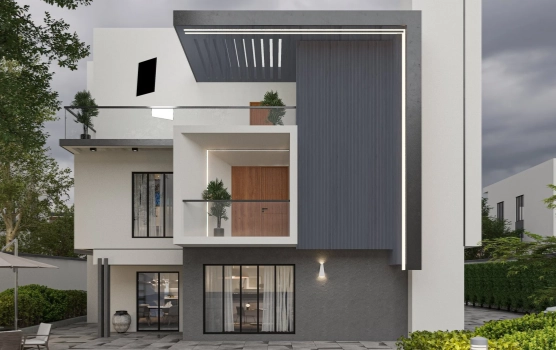
Table of Contents
What Plastic Composite Cladding Is Made Of
Plastic composite cladding is not a coating, and it's not a thin sheet that gets glued onto a wall.
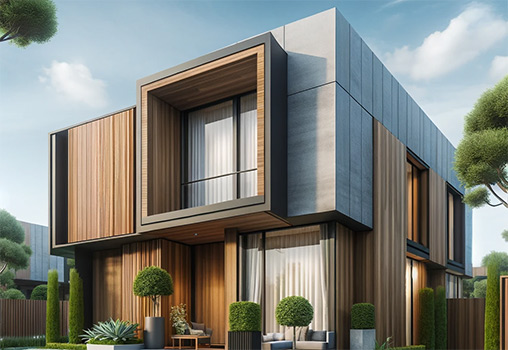
It is a full wall system made from extruded panels and profiles that become the visible outer surface of the building after installation.
Once installed, your cladding system has three main jobs:
1.Protect the structure behind it
It shields the wall substrate from direct exposure and reduces the risk of long-term surface damage.
2.Handle sun and weather exposure
Because it sits on the outside of the building, it must tolerate UV radiation, rain, wind, and temperature change.
3. Deliver a consistent exterior finish
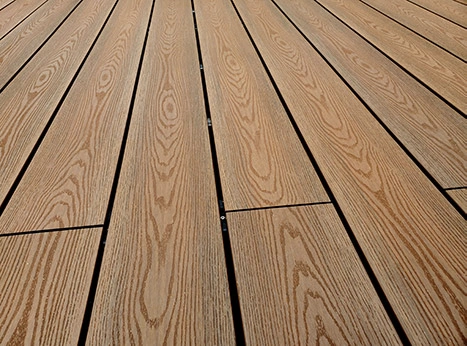
It gives you a uniform wood-like façade without the natural variation that usually comes with timber.
That combination is why you often see it specified for residential developments, commercial buildings, hotels, and public projects.
What Plastic Composite Cladding Is Made From
Plastic composite cladding is produced by mixing plastic with reinforcing materials, then shaping it through extrusion.
Most products are built from three material groups:
1) Plastic (Base Material)
Usually PVC or PE (polyethylene).
This choice affects important real-world performance points such as: weight, rigidity, moisture resistance, and how much the panel expands and contracts with heat.
So when you compare suppliers, you're not just comparing surface patterns—you're comparing the core material platform.
2) Fiber (Reinforcement)
Often wood fiber.
This helps improve stiffness (less "soft" feel), surface texture (more natural wood-like look), and dimensional stability.
3) Additives
Additives are used to improve performance, including:
1) Impact strength (to reduce cracking during transport and installation)
2) Color stability (slower fading)
3) Processing stability (more consistent extrusion quality)
Some exterior-grade products include a protective surface layer (co-extruded during production). That layer improves resistance to sun exposure and outdoor aging.
Different factories balance these ingredients differently, which is why not all composite cladding performs the same on real walls—even if they look similar in photos.
How Plastic Composite Cladding Is Made
Plastic composite cladding is made by extrusion, meaning the factory continuously pushes the heated composite mixture through a shaped die to form panels and profiles.
For you as a buyer, extrusion matters because it allows the supplier to produce profiles that are:
1) Straight
2) Consistent in size
3) Repeatable across batches
This creates direct project benefits:
1) Panels align properly and don't fight the installer
2) Large wall areas look clean and uniform
3) Future orders match previous shipments (critical for phased projects)
If you supply distributors or projects, this repeatability is one of the strongest reasons to choose composite cladding.
Why People Choose Plastic Composite Cladding
Most buyers do not choose plastic composite cladding because it's trendy.
They choose it because it reduces common project headaches and long-term maintenance problems.
Compared with timber cladding:
1)You avoid regular repainting
2)You reduce rot and insect risks
3)You get fewer complaints about natural color variation
Compared with metal panels:
1)Dents are less obvious
2)On-site handling is easier
3)Thermal movement is easier to manage in a wall system
Compared with fiber cement:
1)Panels are lighter
2)There is less edge damage during cutting
3)Installation is typically faster
Over time, this usually means lower maintenance cost and fewer call-backs, especially in projects with many units or repeated building types.
Where It's Commonly Used
You'll often see plastic composite cladding used on:
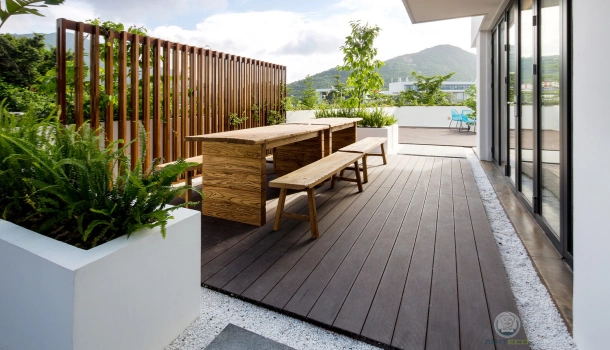
1) Exterior walls
2) Soffits and eaves
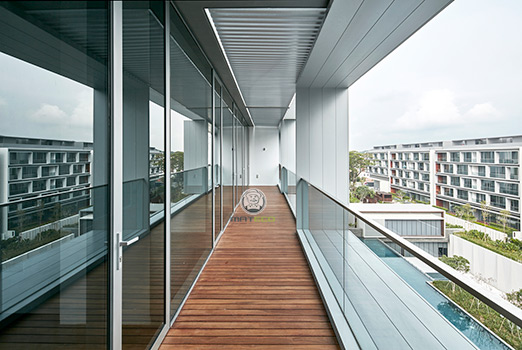
3) Balcony walls
4) Feature sections of façades
5) Screening and shading structures
It's especially popular when:
1) The same material is used across multiple buildings
2) Installation speed matters
3) Long-term upkeep needs to stay low
How It Handles Outdoor Conditions
Plastic composite cladding is designed for outdoor use, but its real performance depends heavily on how it is produced and what materials are used.
Sun exposure
UV resistance comes from the formulation and surface technology—not just from thickness. A thick panel can still fade quickly if the UV system is weak.
Temperature changes
All plastic-based products expand and contract.
A good cladding system manages this through:
1)Proper fixing methods
2)Appropriate spacing
3)A well-designed profile structure
This isn't a flaw—it's simply how polymer-based materials behave outdoors.
When the supplier gives correct installation guidance, thermal movement stays under control.
How Plastic Composite Cladding Is Normally Sold
Plastic composite cladding is rarely sold piece by piece the way retail building materials are.
In real supply chains, it's usually supplied through:
1)Container-based orders
2)Project-approved product ranges
3)Distributor or OEM programs
When you source this category, you will usually evaluate:
1)Minimum order quantities (MOQ)
2)Profile options and color availability
3)Batch consistency
4)The supplier's ability to support repeat orders
In most project or distribution business models, stable supply matters more than small price differences.
What to Check Before You Commit
Before you lock in a supplier, it's worth confirming a few fundamentals.
Key checks include:
1. Plastic base type (PVC or PE)
2. Panel weight and structure
3. Consistency across production runs
4. Complete trims and fixing systems
5. Long-term supply capability
These checks may feel basic—but they prevent most downstream problems.
In Short
Plastic composite cladding is a practical exterior wall system built for repeat use, stable supply, and lower maintenance.
If you're sourcing for distribution or projects, understanding how it's made and how it behaves on site will help you choose the right product—and avoid surprises after installation.