For WPC cladding distributors, choosing what to stock is not simply about selecting as many profiles as possible.
A manufacturer may offer many widths, surface designs, colors, and lengths, but every additional combination becomes another SKU that requires warehouse space, working capital, and future replenishment.
For a new distributor, the better approach is to build a controlled product range first, then expand it according to repeat demand.
The key factors are profile width, color range, MOQ, stock length, container loading, and replenishment lead time.
A new distributor does not need to stock every WPC cladding profile offered by a factory.
Around three cladding profiles can be a practical starting range for a new market.
Medium-width profiles often provide a better balance between appearance and installation speed.
After the main profile range is established, adding more color families can be more useful than adding many similar profiles.
MOQ should be calculated by each profile-color combination.
Standard length should consider both container loading and local selling habits.
Fast-moving stock should be reordered before inventory becomes too low.
How Many WPC Cladding Profiles Should a Distributor Stock?
There is no fixed number that works for every market.
However, starting with too many profiles can quickly spread purchasing volume across too many SKUs. Starting with too few can also limit the choices available to local buyers.
A practical structure is:
2 core profiles for regular stock
1 secondary profile to add another option
Other special profiles supplied according to confirmed demand
Based on our wholesale experience, around three cladding profiles can be a reasonable starting point for a distributor entering a new market.
The first order should be used to test actual sales rather than trying to cover every profile from the beginning.
Profiles with stable repeat orders can then receive deeper stock allocation, while slower-moving designs remain secondary or made to order.

What WPC Cladding Widths Are Practical for Stock?
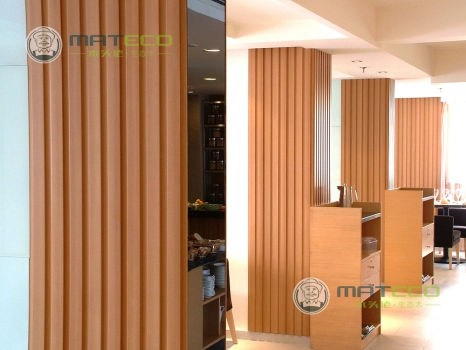
Width affects both installation speed and the finished wall appearance.
Very narrow cladding requires more individual pieces to cover the same area. It can also create a more segmented look after installation.
In our own customer feedback, narrow flat cladding can attract inquiries at first, but some buyers later consider the installed proportion too narrow.
At the other end, wider panels cover more area per piece and can improve installation speed. However, when the visible face becomes too wide, repeated wood-grain patterns may become easier to notice across large wall areas.
For our own product range, widths around 100–150 mm have generally shown a practical balance between appearance and installation efficiency.
This should not be treated as a universal industry standard. Different markets, profile structures, and surface designs can produce different results.
| Profile Width | Main Consideration |
|---|---|
| Narrow | More pieces and joints; can look too segmented |
| Medium | Balanced appearance and installation speed |
| Wide | Faster installation, but repeated grain may become more visible |
For distributors, the most important point is that wider is not automatically better.
The best stock width is the one that local buyers accept repeatedly, not simply the one that covers the wall fastest.
What Length Works Best for Wholesale Stock?
Length is both a product specification and a logistics decision.
For distributors importing full containers, standard length affects:
carton size
container loading
warehouse storage
local transport
cutting loss
customer buying habits
For our export orders, 2.9 m is a practical standard length because it works efficiently with container loading.
One actual loading record for a 145 × 15 mm WPC cladding profile shows:
| Item | Actual Loading Data |
|---|---|
| Product length | 2.9 m |
| Pieces per carton | 10 pcs |
| Cartons per 40HQ | 912 cartons |
| Total pieces | 9,120 pcs |
| Total linear meters | 26,448 m |
This is actual loading data rather than a theoretical estimate.
A 3.0 m length can also be produced, but it requires a different carton size and the loading arrangement needs to be recalculated.
Distributors should therefore avoid assuming that 2.9 m and 3.0 m will provide exactly the same loading efficiency.
At the same time, container utilization should not be the only consideration. If buyers in a certain market are accustomed to 3.0 m lengths, local selling habits may be more important than maximizing container space.
Longer lengths such as 4.0 m are usually better supplied according to confirmed demand rather than kept as normal warehouse stock.
Should Distributors Stock More Profiles or More Colors?
Once the basic profile range is established, the next decision is whether to add more shapes or more colors.
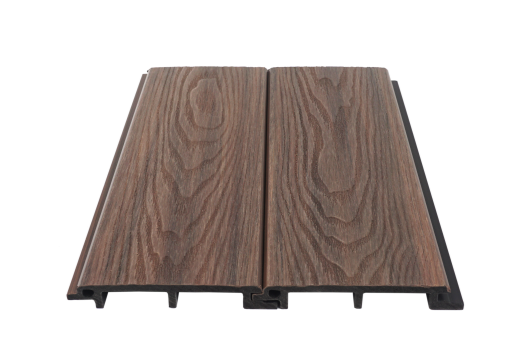
In many cases, adding more color families can provide more selling flexibility than continuously adding similar cladding profiles.
Color has a strong influence on how the finished wall looks, while two similar profile shapes may not appear very different after installation.
For a new market, starting with around three clearly differentiated color families can be a practical approach.
In our current sales experience, Teak, Golden Teak, and Walnut are strong regular colors, while French Oak has recently received more inquiries.
The exact combination should still depend on local preference.
The key is to avoid building too many similar SKUs at the beginning.
How MOQ Affects Inventory Risk
MOQ can multiply inventory faster than many new distributors expect.
For example, if the MOQ is:
2,000 linear meters per profile per color
3 profiles × 3 colors × 2,000 m = 18,000 linear meters
If the distributor increases the range to five profiles:
5 profiles × 3 colors × 2,000 m = 30,000 linear meters
Adding only two profiles has created six additional profile-color combinations.
This is why distributors should calculate inventory by SKU rather than simply by the number of profiles.
In MATECO's current wholesale structure, MOQ is calculated separately for each profile and color combination.
For example:
Profile A + Teak = one MOQ
Profile A + Walnut = another MOQ
Profile B + Teak = another MOQ
Different profiles and colors cannot be combined to reach the same MOQ.
For a new distributor, this is another reason to keep the initial profile range controlled.
When Should Distributors Reorder WPC Cladding?
Initial stock selection is only half of inventory planning.
A distributor can have the right profiles and colors but still lose repeat sales if replenishment is arranged too late.
We have seen a distributor sell cladding successfully, only to run out of the same material when the downstream buyer later needed additional quantities.
The problem was not slow sales. It was that the stock sold faster than the replenishment cycle.
This can lead to:
delayed installations
emergency shipping costs
missed repeat orders
possible color differences between production batches
Reorder before the remaining stock becomes critical.
For reference, our current production lead times are approximately:
20GP: 25–30 days
40HQ: 30–35 days
Distributors also need to allow additional time for ocean freight, customs clearance, and local delivery.
Because of this, stock depth on proven profiles can sometimes be more valuable than carrying too many low-volume profiles.
A Practical Starter Stock Framework
For a new WPC cladding distributor, a controlled starting range can look like this:
2 core profiles
1 secondary profile
Around 3 main color families
1 standard warehouse length
MOQ calculated separately by profile + color
Container loading checked before final order confirmation
Reorder points set before sales begin
This is not a universal formula.
Markets differ in preferred widths, colors, and lengths. The purpose of this framework is to reduce unnecessary SKU expansion during the early stage and allow actual sales data to guide future purchases.
FAQ
How many WPC cladding profiles should a new distributor stock?
Around three profiles can be a practical starting point for a cladding-only range. Two can serve as core stock and one as a secondary option.
Is wider WPC cladding better?
Not always. Wider panels can install faster, but repeated wood-grain patterns may become more visible across large surfaces.
Is 2.9 m a good stock length?
It can work well for export orders and container loading, but local market preference should still be considered before selecting the standard warehouse length.
Should distributors stock more colors or more profiles?
Once the basic profile range is sufficient, additional color families can often provide more selling variety than adding many similar profiles.
How should MOQ be calculated?
If the supplier sets MOQ by profile and color, each profile-color combination should be treated as an independent SKU.
Conclusion
A good WPC cladding stock range does not need to include every size available from the manufacturer.
For new distributors, a smaller number of core profiles, several carefully selected colors, one practical stock length, and a clear replenishment plan can keep inventory easier to manage.
The range can then be expanded according to actual repeat sales rather than catalogue size alone.
For wholesale WPC cladding orders, MATECO can help distributors compare profile options, color combinations, MOQ, and container loading before confirming the first order.