What Is Composite Wood? A Clear, Practical Guide for 2026
As you source materials for construction, renovation, or manufacturing projects, you'll often come across the term composite wood. It's widely used across decking, wall systems, furniture, cabinetry, and engineered structures. But what does it actually refer to—and where does it make sense in real-world procurement?
This blog breaks down the essentials so you can evaluate composite wood accurately for your own product lines or project needs.
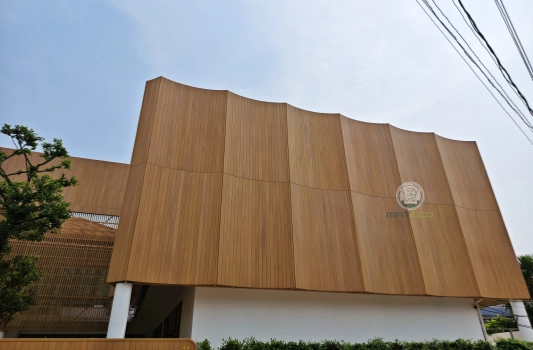
Table of Contents
What Is Composite Wood?
Composite wood refers to manufactured wood-based materials made by combining:
Wood fibers, sawdust, chips, or veneers
Plastic, resin, or engineered binders
Optional additives for strength, color stability, or processing
Unlike solid lumber cut directly from a log, composite wood is engineered for predictable performance and consistent quality.
It's an umbrella category that includes:
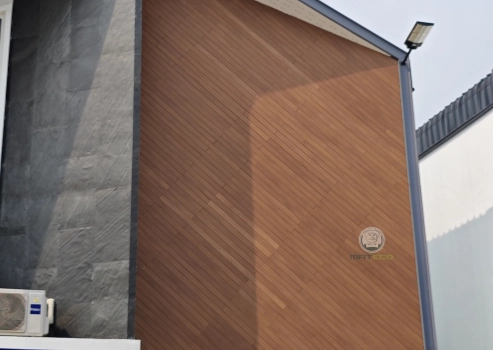
1) WPC (Wood–Plastic Composite): Common in decking and exterior cladding
2) Particleboard & MDF: For furniture and interior manufacturing
3) Plywood & OSB/OSL: For structural and panel applications
Depending on the formulation, some composite woods behave more like traditional wood (plywood), while others are closer to technical polymers (PVC-WPC).
How Composite Wood Is Made
Although processes vary by product category, the general steps include:
Collecting and preparing wood by-products: Fibers, powder, chips, or veneers are dried and refined.
Mixing with thermoplastic resin or adhesive systems: Examples include PVC, PE, urea-formaldehyde resin, or engineered bonding agents.
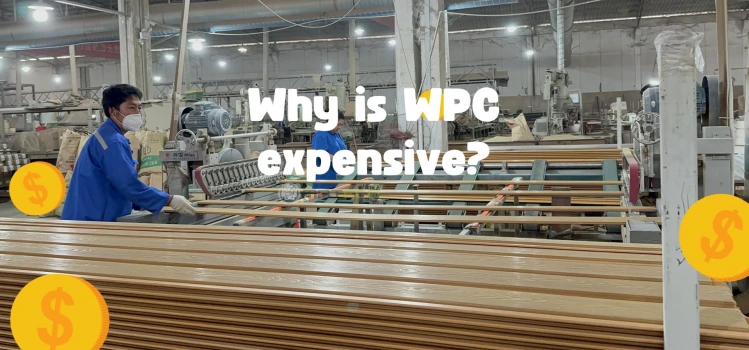
Extrusion or hot pressing: Material is shaped into boards, profiles, or panels using heat and pressure.
For example, MATECO's outdoor WPC uses a PVC-based core with a UV Armor co-extrusion layer for long-term color stability and reduced cracking, which is one reason their boards are lighter and easier to install compared to typical PE-based WPC products.
Common Uses of Composite Wood
Composite wood products cover a wide range of applications:
Exterior
1) Decking boards
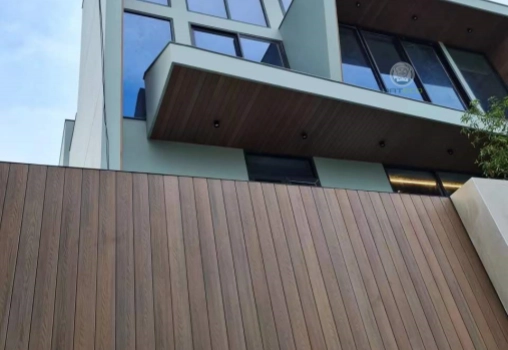
2) Wall cladding and façades
3) Fence profiles
4) Timber tubes and louvers
5) Pergolas, railing systems, sunshades
Interior
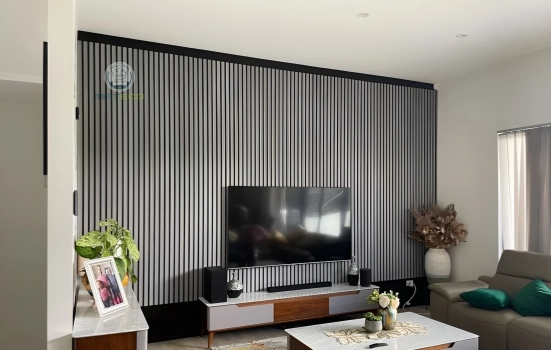
1) Wall panels
2) Furniture components
3) Cabinetry
4) Ceiling systems
5) Partitions and decorative tubes
Different composites are suited to different environments—for example, WPC for outdoor moisture resistance, MDF for interior smooth finishes, and plywood for structural framing.
Why Composite Wood Is Widely Used
If you regularly handle project specifications or supply contracts, you'll notice composite wood is often chosen for the following reasons:
1. Durable and Weather-Resistant
1) Composite boards resist moisture absorption, rot, and insect damage.
2) They withstand splitting and warping.
3) Advanced PVC-based WPC systems such as MATECO's UV Armor series maintain surface stability and reduce fading even after long-term exposure.
2. Low Ongoing Maintenance
1) No annual painting, staining, or sealing.
2) Most applications only require routine washing.
3. Consistent Quality
1) Engineered materials eliminate natural defects like knots or grain irregularities.
2) This consistency is valuable for bulk procurement and large-scale project orders.
4. Wide Range of Colors and Profiles
1) Manufacturers can create wood-look finishes, smooth or embossed textures, and large-format panels.
2) Specialized shapes like timber tubes and grooved cladding are also available.
5. Resource Efficiency
1) Many composite woods use recycled plastics and wood waste.
2) This reduces dependence on virgin timber resources.
6. Long-Term Cost Control
Although initial pricing may exceed basic lumber, the lifecycle cost is often lower due to reduced labor and minimal upkeep.
Trade-offs and Limitations
Composite wood isn't ideal for every situation. Consider the following:
1) Higher Upfront Cost: Quality WPC typically costs more than softwood lumber.
2) Less "Natural" Character: Some profiles appear more synthetic than natural timber.
3) Heat and Surface Sensitivity: Boards can heat up under strong sun; darker tones may fade or scratch more easily.
4) Recycling Challenges: Mixed-material composites are more difficult to recycle at end of life.
5) Moisture Sensitivity in Non-WPC Composites: Interior products like MDF or particleboard require sealing to prevent swelling.
When Composite Wood Makes the Most Sense
You're more likely to specify or stock composite wood when you need:
1) Outdoor performance: Decks, wall panels, fencing, and louvers exposed to moisture and UV.
2) Low-maintenance installations: Hospitality, commercial buildings, public spaces, or premium residential projects.
3) Consistency across large areas: Ceiling systems, interior panels, and cabinetry requiring uniformity.
4) Eco-conscious purchasing: Projects aiming to reduce timber consumption or utilize recycled materials.
Conversely, if your project requires the organic aging of natural timber or the lowest possible upfront cost, traditional wood may still be preferred.
Conclusion
Whether you're sourcing materials for exterior projects like decks and wall façades or interior applications such as wall panels and furniture components, composite wood offers consistent quality, reduced maintenance, and broad application flexibility. It isn't the lowest-cost or most natural-looking option, but for projects that require long service life, controlled appearance, and efficient installation, it's a practical material choice for builders, distributors, and large-volume buyers.
If you are looking for a WPC manufacturer, MATECO will be your best choice.
WhatsApp: +86-13380085620
Email: info@matecowpc.com