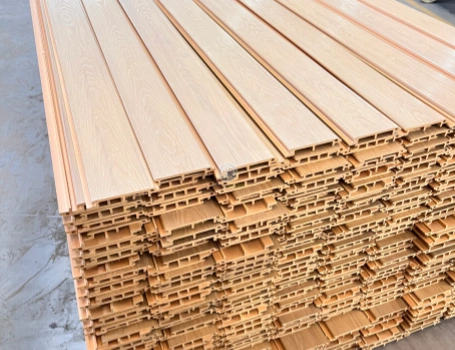
When you import WPC exterior cladding for wholesale or distribution, an approved sample is only the starting point. You also need to know how the factory checks production, connects test reports to the products you buy, and prepares panels and accessories for shipment.
A factory audit evaluates the manufacturer's capabilities and control systems. A pre-shipment inspection checks the goods prepared for a specific order against agreed requirements. They complement each other: the audit helps you assess how the supplier works, while order-specific checks help verify what you will receive.
Use the checklist below during a factory visit or remote review. The later sections also explain how assembly checks, written specifications and pre-shipment inspection connect the audit findings to your bulk order.
Key Takeaways
Verify the factory identity, relevant production lines and scheduling evidence for your order.
Match test reports to the sampled product, material system and stated scope.
Check both routine inspection and measured test records.
Use a carton batch number to verify traceability.
Assemble panels with the clips and trims intended for your order.
Inspect packaging for panels and accessories before shipment.
Record agreed specifications before bulk production.
Quick Factory Audit Checklist
Use this summary to request evidence before reviewing each topic in detail. During the factory audit, assess the procedures and examples of records. For your specific order, follow up with agreed specifications, assembly checks and pre-shipment inspection.
| Review area | Evidence to request | Follow up if |
|---|---|---|
| Factory identity | Business licence, production address and explanation of company relationships | The documents and production site cannot be reconciled |
| Production capacity and scheduling | Relevant lines, recent production and scheduling records, and a proposed order schedule | The quantity or delivery date has no supporting production plan |
| Test report coverage | Complete reports, sample identification and coverage explanation | Results are applied to profiles without a stated basis |
| Routine quality control | Inspection demonstration and recent test records | Criteria, conditions or rejection actions are unclear |
| Traceability | Carton batch linked to production and inspection records | The batch cannot be traced |
| Panel and accessory fit | Assembly using the intended panels, clips and trims | Accessories cannot be linked to the ordered profile |
| Packaging | Open-carton photos, protection details and labels | Vulnerable edges are exposed or goods move excessively |
| Order specification | Written specifications and approved samples | Key requirements remain verbal or changes are uncontrolled |
Confirm the Factory Identity and Production Capacity
Start by confirming who manufactures the cladding and who is responsible for your order. Ask where extrusion, co-extrusion, surface finishing, inspection and packing take place.
Verify the Company and Production Address
Request the manufacturer's business licence and compare the company details and address with the production site. If the registered address, production address or contracting company differs, ask for supporting documents explaining the relationship.
Request:
The business licence and identification of the actual production address.
Documents explaining the relationship between the contracting company and the manufacturer, where applicable.
Confirmation of which processes are completed in-house or outsourced.
A clear contact for specification changes and quality issues.
Review Relevant Lines and Recent Scheduling Records
During a visit, ask to see lines used for the cladding profiles and co-extruded surface system you intend to buy. For a remote review, request a live walkthrough showing those production and inspection steps.
Ask for recent production and scheduling records for comparable profiles. The supplier can redact other customers' information while showing relevant quantities, production dates and line allocation.
For your planned order, request a schedule explaining:
Which lines will produce the selected profiles.
The output assumptions used to estimate production time.
How existing commitments affect the available production window.
Time allocated for material preparation, changeovers, inspection and packing.
The proposed completion date and how delays will be communicated.
Evidence to request: company and address documents, a walkthrough of relevant lines, recent production and scheduling records, and a plan supporting your order quantity and delivery date.
Match Test Reports to Your Cladding
A report title alone does not show whether the results apply to your order. Check the sample description, profile identification, dimensions, material structure, test date and test conditions.
For exterior cladding, the supplier may have reports covering chemical substances, UV exposure, thermal expansion, moisture-related dimensional change, water absorption, thickness swelling and flexural strength. Ask what each report measures and which products the supplier says it covers.
Check the Basis for Series Coverage
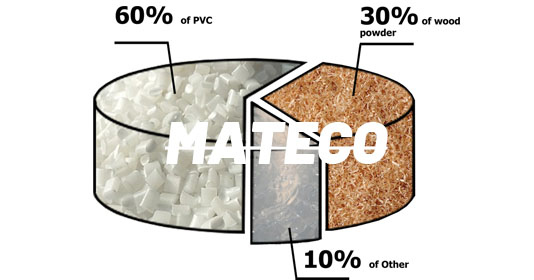
MATECO WPC's outdoor series uses the same core formulation and ASA co-extruded surface system. Its available reports cover tested SVHCs, RoHS, UV exposure, thermal linear expansion, moisture-related linear expansion, water absorption and thickness swelling, and flexural strength.
When a supplier presents a report for a product series, ask it to identify the tested sample and explain the basis for applying the results to other profiles. A shared formulation is useful context, but it should not be treated as proof that every profile has the same performance.
For flexural testing in particular, review the tested cross-section, wall thickness, support span, loading speed and test direction. Different profile structures need their own consideration when you compare results.
For UV testing, check exposure conditions, duration and the reported assessment. Avoid converting exposure hours into a guaranteed number of outdoor service years without a supported basis.
Evidence to request: complete reports, identification of the tested samples, and a written explanation of the claimed coverage for your selected profiles.
Check Routine Inspection and Flexural Testing
Ask the factory to show what inspectors check, how often they check it, and what happens when a product fails.
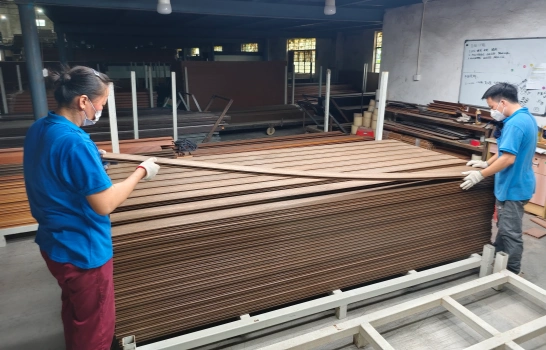
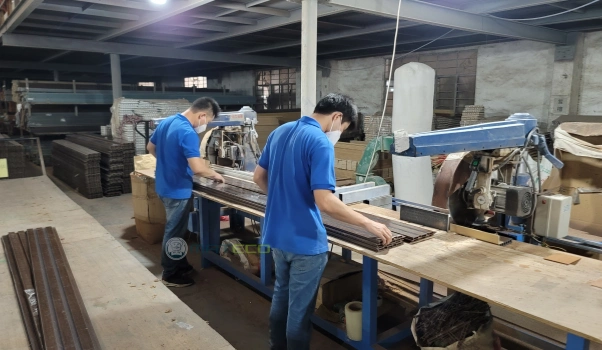
At MATECO WPC, every wall panel receives inspection of its surface, colour and cut ends, together with manual bending and handling checks. Inspectors apply force by hand, including a two-person handling check, to screen for obvious cracking or abnormal brittleness. Nonconforming panels are separated from accepted goods.
MATECO WPC also performs daily sampled three-point bending tests using equipment. These provide measured results alongside the individual manual checks.
Review How Each Check Is Used
Manual checks can help screen visible or obvious defects. They do not produce a measured flexural-strength value. Equipment tests need recorded conditions so that results can be interpreted and compared.
Ask to see:
The inspection criteria used for your selected profile.
The sampling routine and recent equipment test records.
The support span, loading speed and specimen orientation.
The acceptance criteria and action taken after a failed check.
How rejected goods are kept out of packing.
Routine QC tests and external test reports may use different conditions. Review those conditions before comparing their results.
Evidence to request: an inspection demonstration, recent records for the selected profile, and the procedure for isolating nonconforming goods.
Verify Batch Traceability and Retained Samples
Choose a packed carton and ask the factory to trace its batch number. This gives you a practical way to check the system during an audit.
MATECO WPC marks cartons with batch information that can be traced to the production date, machine and inspection records. It also retains samples for two years.
Ask the supplier to demonstrate how the carton information connects to its records. If a problem is reported after delivery, this connection helps establish which production batch should be investigated.
Also confirm:
How retained samples are identified.
How long samples and records are kept.
What photographs, carton details and order information you should provide with a complaint.
How the factory investigates and responds to a reported issue.
Evidence to request: a carton label, the corresponding production and inspection records, and an identified retained sample where available.
Check Panels, Clips and Trims Together
During the factory audit, ask how the supplier verifies panel and accessory compatibility. For your order, confirm the fit of the actual profile and accessory combination before bulk production, then include an assembly check in the pre-shipment inspection.
An individual panel sample cannot show every issue that may appear during assembly. Ask to assemble several panels with the clips, starting pieces and trims intended for your order.
Check:
Whether adjoining panels engage consistently.
Whether joint alignment remains even across several pieces.
Whether the supplied clips fit the fixing area.
Whether corner and finishing trims fit the selected profile.
Whether accessory codes match the quotation and packing list.
Review the installation instructions at the same time. They should explain fixing arrangements, support spacing and movement allowances for the relevant application.
For importers and distributors, this check also helps confirm what needs to be stocked and supplied with each cladding profile. Do not assume that one clip or trim suits every model.
Evidence to request: an assembled sample, an accessory list linked to the profile, and the relevant installation guidance.
Inspect Packaging and Goods Before Shipment
During the factory audit, review packing procedures and examples of packed goods. Before shipment, inspect the actual order against the agreed packaging and labelling requirements.
Long cladding panels and shaped accessories need packaging that supports handling and transport. Review the complete packing arrangement, including carton strength, internal movement and protection of vulnerable ends or edges.
A Trim Delivery That Required Replacement
One MATECO WPC customer purchased trims from another supplier and arranged for them to be delivered to MATECO WPC for shipment together with its wall panels. On arrival, the trims had damaged edges. The cartons were thin, and the edges had insufficient protection. The customer returned the trims and placed a replacement order with MATECO WPC.
This case shows why goods from separate suppliers should be inspected when they arrive for consolidated shipment. Damage discovered at that stage can be addressed before the export shipment leaves.
MATECO WPC uses thick cartons, but carton thickness is only one part of a packaging review. For any supplier, ask to see the actual packing arrangement for the products you intend to buy.
Check:
Protection of panel ends, interlocking edges and trim corners.
Support for long profiles during storage and handling.
Whether products can move excessively inside the carton.
Labels showing the model, colour, quantity and batch.
Identification and quantities of separately packed accessories.
The condition of goods received from another supplier before consolidation.
If you order mixed colours, confirm the agreed packing ratio and identification method.
Evidence to request: photographs of open and closed cartons, labels, the packing list and checks made before loading.
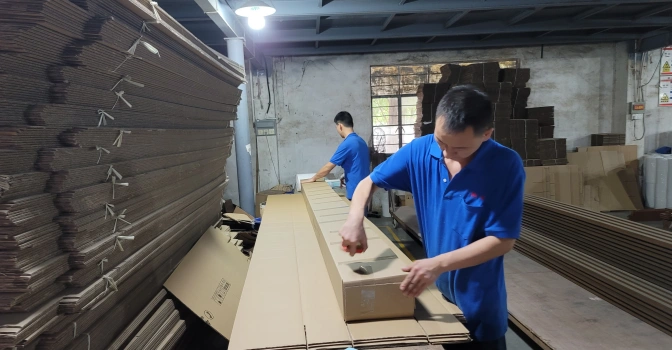
Approve Written Specifications Before Bulk Production
Turn the audit findings into a written specification for your order. This gives you and the supplier a shared reference for production and acceptance.
Confirm:
Profile code, cross-section, length and agreed tolerances.
Core and co-extruded surface requirements.
Approved colour and texture samples.
Agreed inspection and acceptance criteria.
Accessory codes and quantities.
Carton quantities, labels and packing arrangements.
How material, profile or accessory changes will be communicated and approved.
Keep an identified reference sample where practical, and confirm how the factory will compare production against it.
Discuss Your Wholesale Cladding Requirements
If you are comparing a WPC exterior wall cladding supplier, send MATECO WPC your preferred profiles, target market and estimated order quantity.
You can discuss the available test documentation, product specifications, matching accessories and packing requirements before confirming a bulk order.
Contact MATECO WPC for exterior cladding specifications and a wholesale quotation.